Multiple choice
A multiple-choice item asks a question and lists several answers. Test-takers select one answer. To let them select more than one, use a multiple-choices item instead.
Try the simulation, or open the practice test to see examples in the test player.
Multiple-choice simulation
Choose how to try it. See it in action: Dev Patel answers three multiple-choice items in 2026 Y9 Numeracy Practice, each laid out a different way. Or create one: Hannah Price adds a new multiple-choice item, then sees it as test-takers will. A guide sits beside each step. Just want to look around? Skip straight to free practice.
Practice test
Open this test in the Janison test player to view examples of multiple-choice items.
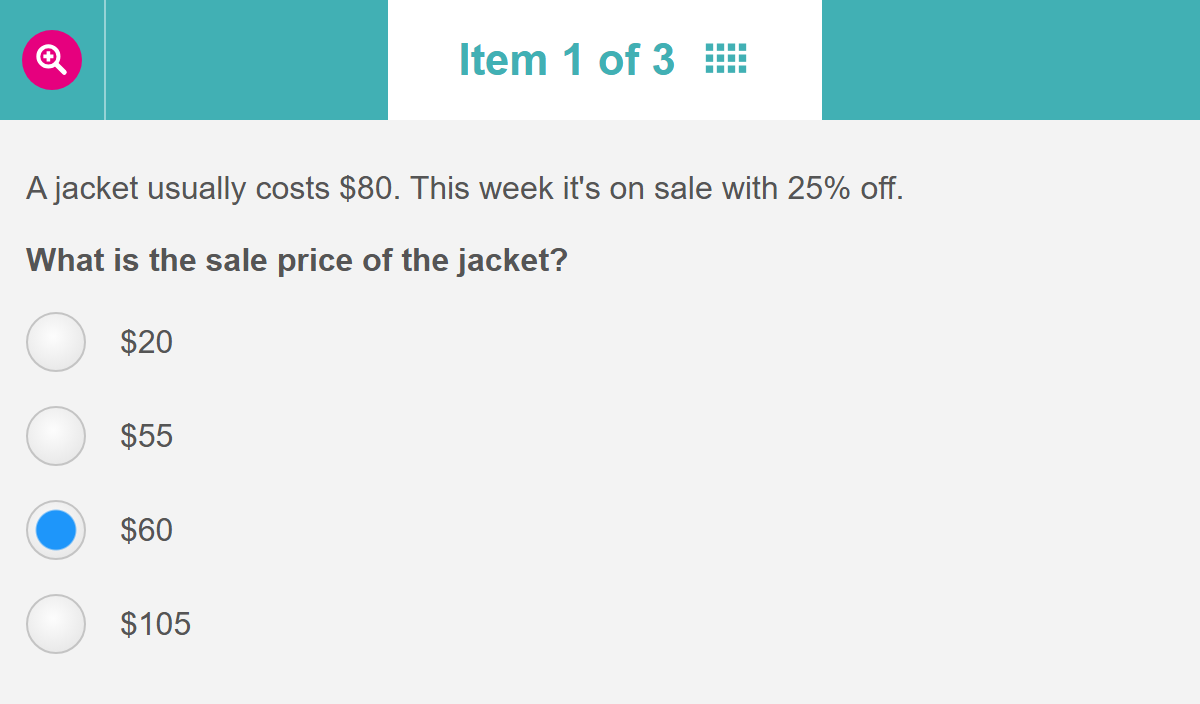
Test-takers select an answer with its radio button, or by pressing its number key: 1 for the first answer, 2 for the second, and so on. Answers can be text, as here, or include images.
Create a multiple-choice item
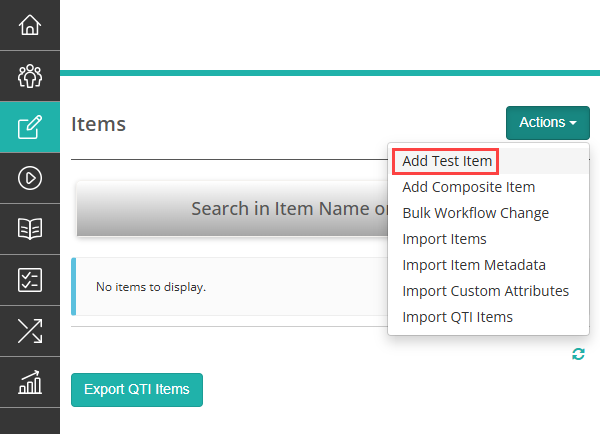
Navigate to Author > Items and select Add Test Item from the Actions dropdown.
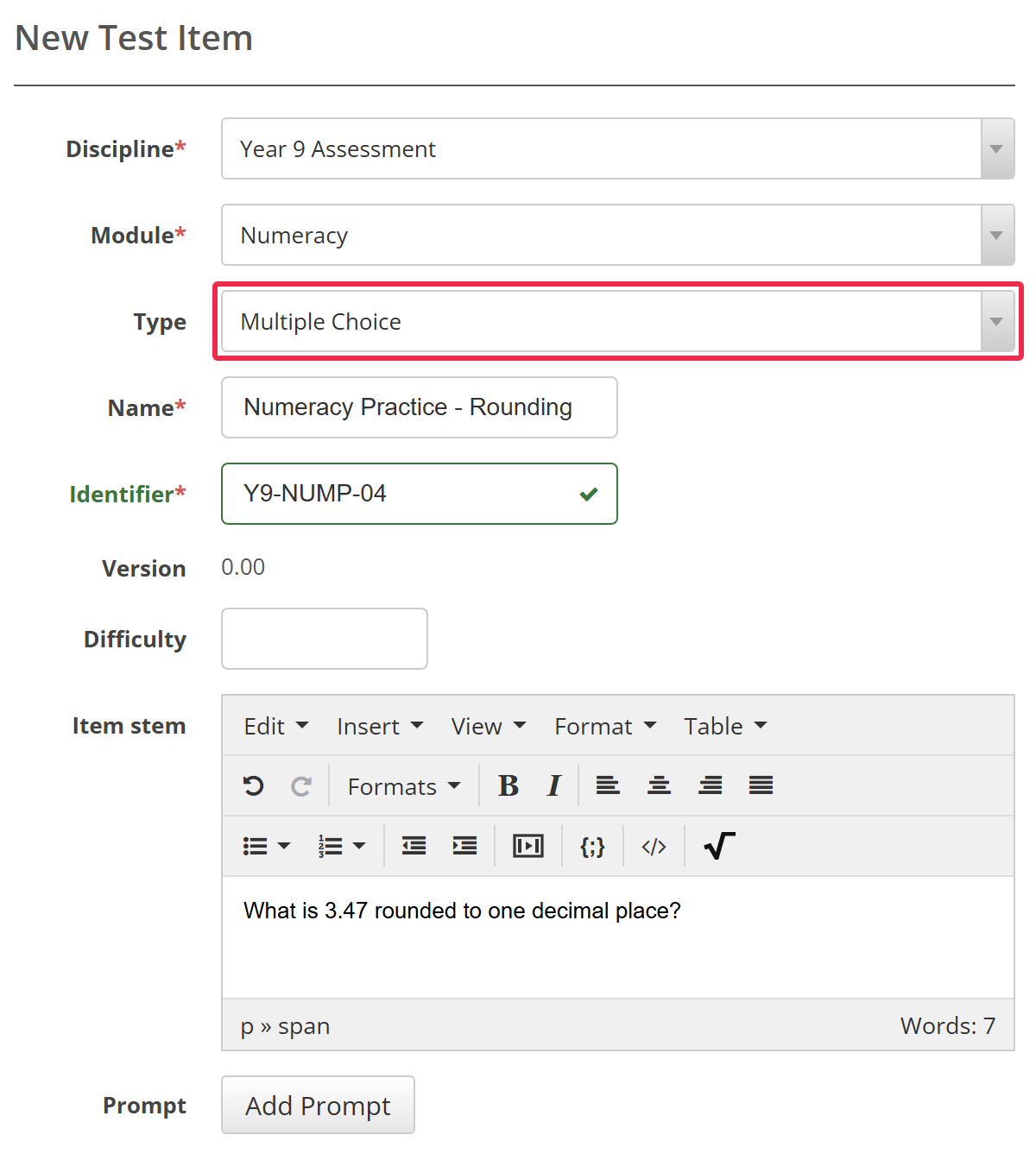
The New Test Item form opens. Choose the Discipline and Module, select Multiple Choice as the Type, and enter a Name and Identifier. Difficulty is optional. Then enter the text of the item in Item stem.
To add a prompt below the item stem, select Add Prompt. See Prompts.
Next, set how the answers are laid out.
Orientation — Vertical, the default, lists the answers one below another. Horizontal places them side by side. The practice test has an example of each.
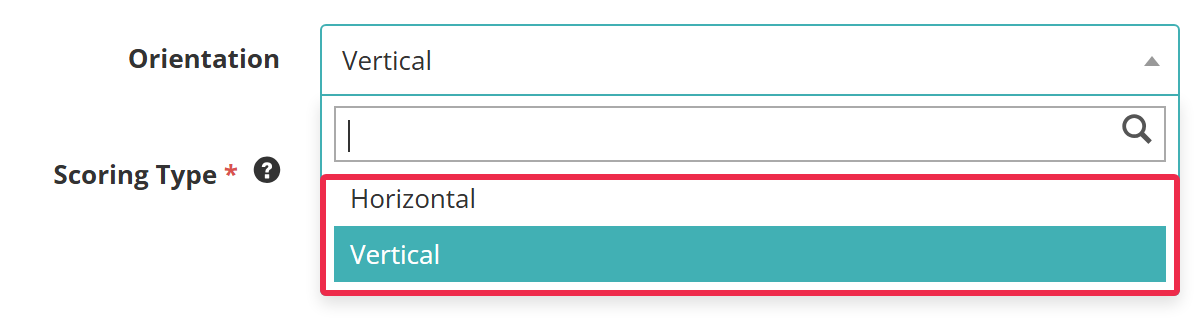
If you choose Horizontal, an Options Per Line field appears. It sets how many answers sit on each line. Enter 2 or more, or leave it blank for 4. The practice test has two examples.
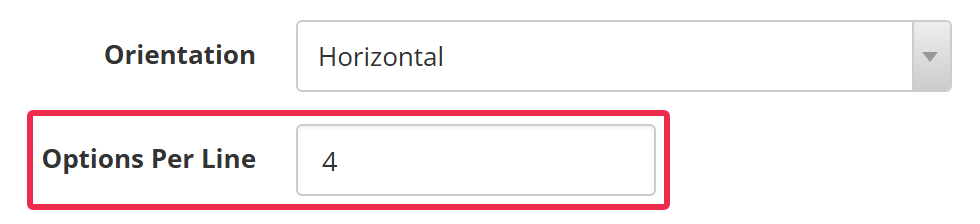
Scoring Type — Correct/Incorrect, the default, or Per Distractor. See Setting scores and marking below.
Shuffle — Tick it to show the answers to each test-taker in a different random order. Shuffling applies to tests taken on screen. Paper tests keep the order you entered.
Enter each answer in the Answer column and select the correct one in the Correct column. The table always ends with an empty row: start typing in it and a new row appears below. To remove an answer, select the red delete icon in its Actions column, then select Really? to confirm.
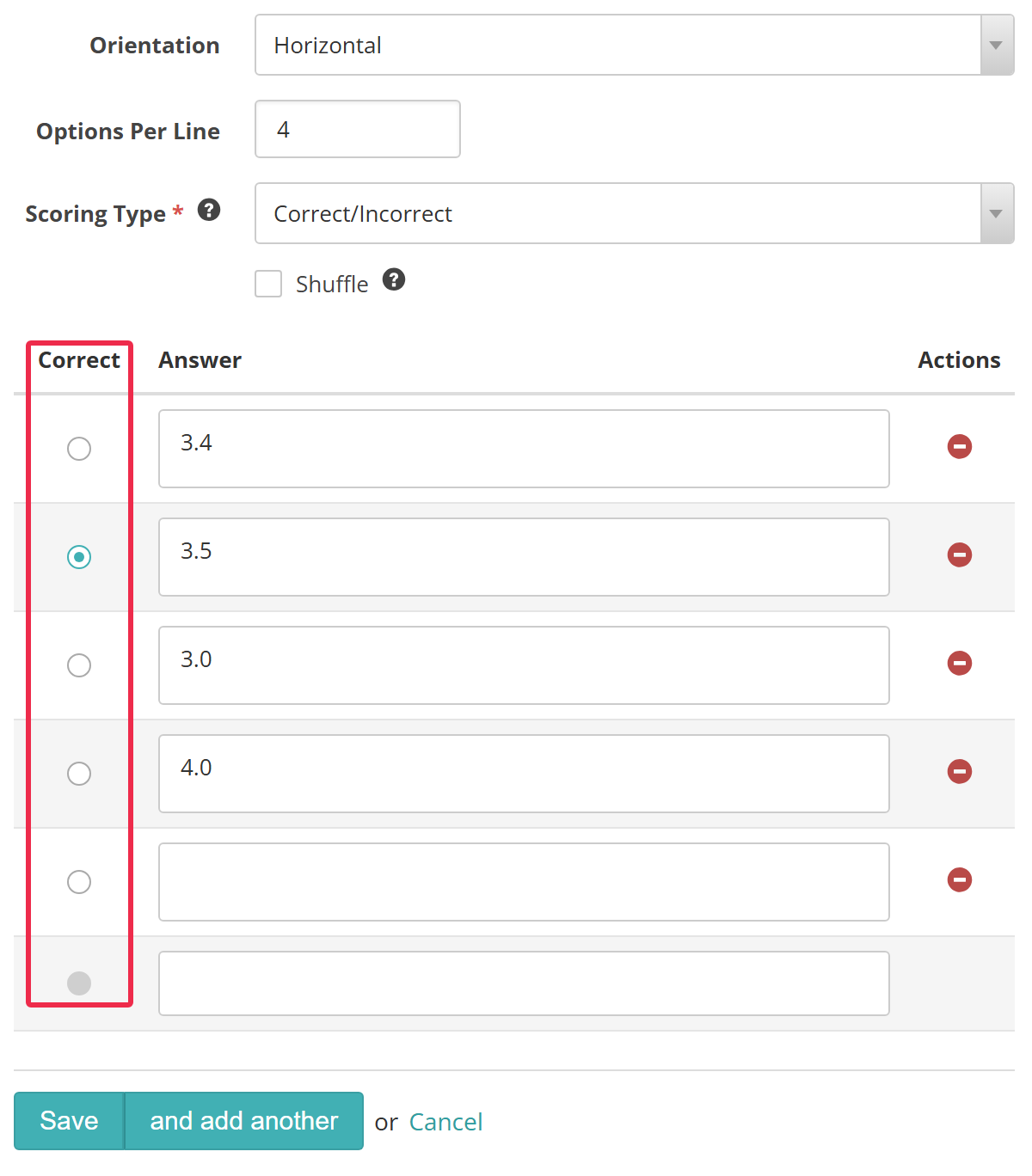
Select Save. On a new item, select and add another to save it and open a blank form for the next one.
Setting scores and marking
Multiple-choice items are system marked.
There are two scoring types available, Correct/Incorrect and Per Distractor.
Scoring type
Correct/Incorrect — The correct answer scores 1 and every other answer scores 0.
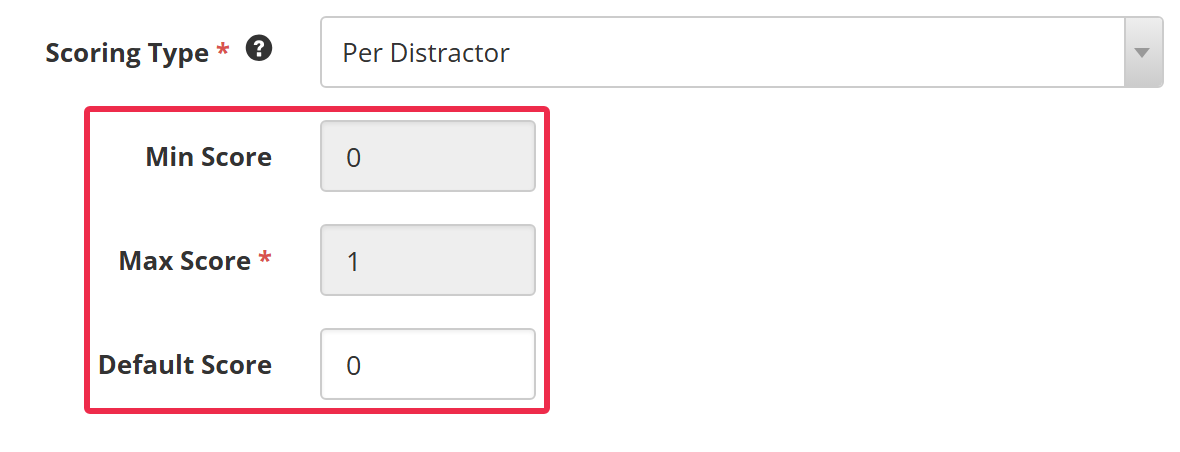
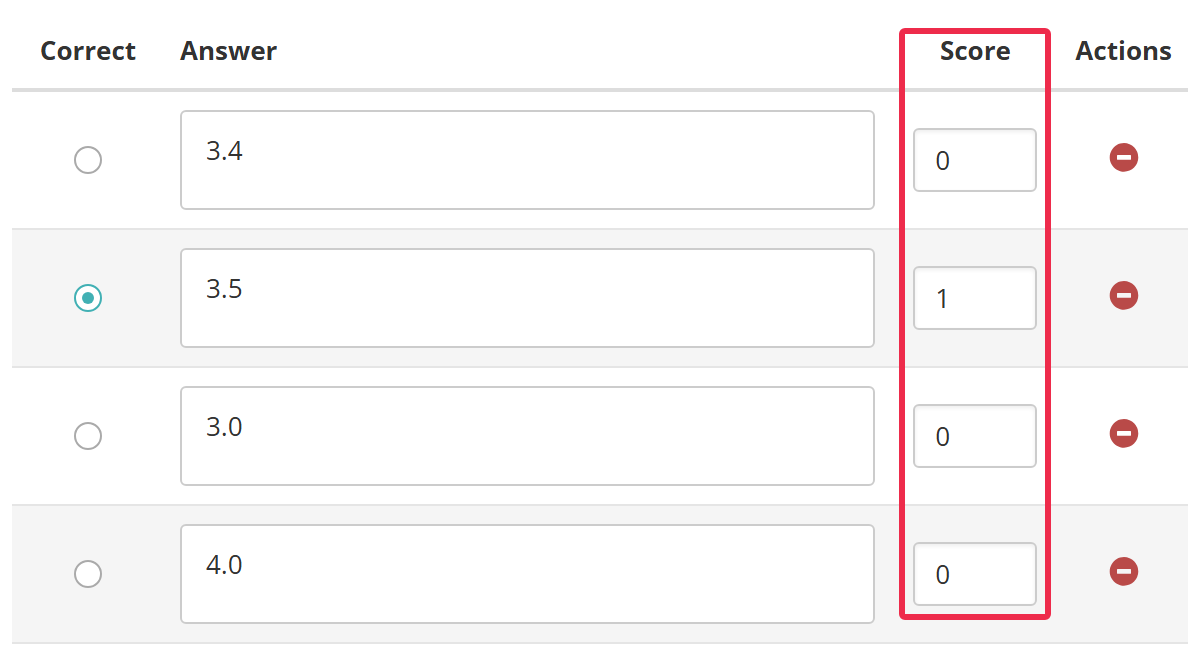
Per Distractor — You give each answer its own score, so a nearly right answer can earn part marks. You still select one answer as correct. These fields appear:
- Min Score — The lowest score the item can give. Insights works it out from the answers' scores and the Default Score, so you can't edit it.
- Max Score — The highest score the item can give. Insights works it out the same way, so you can't edit it either.
- Default Score — The score for any answer whose Score is left blank.
A Score column appears in the answer table, where you set the score for each answer.
Settings
Administrators can configure the following settings at Settings > Test Designer Settings > Question Options.
Shuffle by default — ticks Shuffle on new multiple-choice and multiple-choices items. Items that already exist keep their own setting.
Per Distractor By Default — sets Scoring Type to Per Distractor on new multiple-choice and multiple-choices items.
Enable Prompt For Questions — shows the Prompt field, so you can add a prompt below the item stem. See Prompts.
Under Settings > Test Designer Settings > Available Question Types:
Multiple Choice — always available for tests, so it can't be switched off.
Response Conditions — ticking this column for Multiple Choice adds an Add Response Condition link to multiple-choice items. The checkbox only appears where response conditions have been enabled for your site.